Quick Notes for a Sunday Afternoon

Unexpected Game Revival

A while back, there was this mobile game, Final Fantasy Brave Exvius. It had a pretty decent story and the central conceit of the play mechanic was also pretty nice. The art and music was good for a mobile game. They had a gacha system that was reasonably generous, though as time went on and they continued to need to release new characters, the power creep became super real. It shut down back in 2024 (the Japanese servers went until 2025, but did eventually also close). Kind of a shame, it was pretty fun for what it was.

Well, it’s back, as Final Fantasy Resonance. They took the story and art and music and cleaned it all up, got rid of the gacha system (while adapting the “vision” system the game had introduced to explain the gacha system, since it’s kind of central to the story), and fleshed out the world map and dungeons, and so now it’s a full fledged standalone 2D-HD Final Fantasy title. I played through the demo (which is the entire first chapter of the game, so the save carries over when the full title comes out), and it was a really pleasant JRPG experience. So, y’know, kudos to the development team for seeing the bones were good and not throwing them out, just because the online service had to close. Good work, and I hope you’re rewarded for it.

The Block System Sucks

We recently migrated Simone’s site, and it was the first opportunity I had to really dig into WordPress’s block editor system. I can certainly see why they bothered creating it – you can do a fair bit of customization with just their built in site editor, without having to touch a line of HTML, PHP, CSS, or Javascript. If you want to make creating your own site more accessible, it makes a ton of sense. I also kind of hate it.

I realize some of this may be me being a curmudgeon and having gotten used to the old system, but it all ends up feeling disjointed to me, where it’s not very clear where you make a distinction between a template, a part, a pattern, or a page. And what’s worse, is it’s super non-obvious where any of those customizations live on your server (answer: in your database, and all the stuff like font and color changes are tied to that specific theme). If you started customizing a default theme and have now decided to turn it into either a child theme or its own theme, good luck getting those settings migrated (even though it’s super easy to start messing with stuff without realizing you run the risk of screwing things up if the theme gets an update).

So let’s say you want to export all those customizations you’ve made. Where do you do it? It’s not in the export settings, it’s not an easy link on the main page of the site editor. Answer: it’s on some editor pages if you go to a menu and look for an “export site” link, which downloads a zip that you can then modify and manually upload. It’s fucking stupid. Like, you’re all too happy to add a link for resetting any style customizations you’ve done on the style page, but not an “export/import styles” link? Did you even stop to think about the user experience, or that people might want to back things up, or that by making it easy to import, export, and share styles, people would be more willing to experiment?

I’d been debating making a new theme for this site using the new block editor, but nah. I’ll stick with what I have for now.

Falling into Fall

September went by really fast. I was hoping to get out and about more, but that’s just not how it panned out. We’re starting to see some color, which is always a delight.
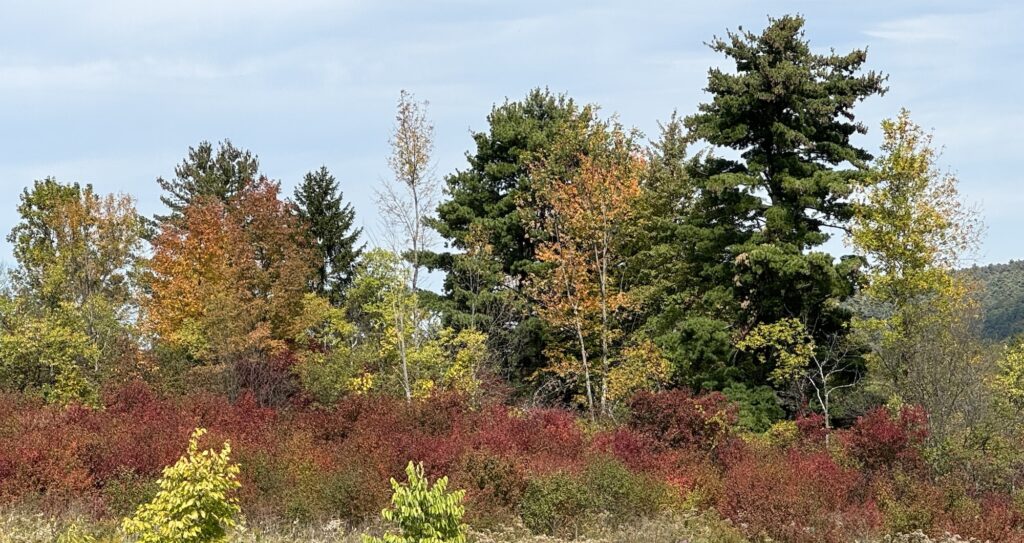
We’ve been planning some trips for later in the fall and winter, so there’s some things to look forward to (important, since the winters here can be a little brutal). If we’re going to be here for another winter (and it certainly looks like that’s the case), we’re also thinking we should double down on the hygge, do our best to live the cozy life while preparing to try and sell the house and move *hand waves* somewhere in the spring. If you’ve got thoughts on how to encourage the cozy hibernation vibe, let me know.

WordPress, Tumblr, and the Web

Over at The Verge, Nilay Patel has a good interview with Matt Mullenweg called How WordPress and Tumblr are Keeping the Internet Weird. (Matt is the CEO of Automattic, which owns WordPress and recently acquired Tumblr.) The interview covers a lot of ground, but there were a few highlights for me. For instance, I thought this was a good take on the state of open source and the tragedy of the commons:

Tragedy of the commons is from economics actually. It’s a story. There’s a common field that belongs to this town, but it doesn’t belong to any one person. If all the farmers brought their sheep and cattle to graze in that field, but none of them were investing in maintaining it — maybe not having their particular sheep or cattle lay off it so things can regrow. The field gets overgrazed and dies. No more grass. Everyone loses.

In open-source, it’s very easy for companies to use open-source without contributing anything back, but that’s kind of one of the features of it. We can’t complain about it really, because that is what the license says you can and should do. But I think that companies who think more long-term say, “Okay, I’m getting a ton of value for this. I’m not paying a penny. How do I make sure that this is around five or 10 years from now?” We’ve seen examples of libraries that the whole internet depends on.

Matt Mullenweg

Also, I really love the idea of this open, transparent approach to decision making and discussion for a company:

What’s interesting at Automattic is there’s no internal email. I get a handful of emails a year from my colleagues. Everything happens on these internal blogs. What that means is we have essentially an organizational blockchain where every single decision going back to 2007 is on one of these internal blogs. You can find how every piece of code works, or every business decision, or every logo. Everything is in there somewhere.

Even if you and I decided something in a meeting, we need to write it up afterwards. It’s on this P2, so people can participate in it asynchronously. Future generations or future versions of ourselves who’ve forgotten why we made a decision can tell why we did that.

Finally, we try to say, “Reversible decisions quickly, and irreversible decisions deliberately, or slowly.” We put pretty much every decision into two categories. Most — 99% of what you do — is very reversible. Some things are really big. Who you take funding from, acquisitions — these things are hard to unwind, so you need to make those decisions very deliberately.

Matt Mullenweg

I don’t think it’d be the right choice for every company, because frankly not everyone is wired that way, but if you can cultivate that sort of culture, it’s really appealing to me.

It was also interesting to get some insights into his plan for Tumblr, which gives me a bit of hope:

It used to be every post we did on Tumblr, people would say, “Oh, you launched this new feature. Why haven’t you gone rid of the porn bots and Nazis?” So we had to do that. There were porn bots and bad people publishing on Tumblr, and we’ve done our best and still today are doing our best, to keep it a healthy, positive place on the web. If I have to say what I would love for Tumblr to be — besides just an alternative, another place you can go that’s different from the other social networks — is a place for art and artists.

Art is necessary for society. It feeds the soul. It’s naturally transgressive. Art pushes boundaries. We need to evolve how Tumblr moderation works to encompass that. It needs to be the best place on the web for art and artists — a place where they can have a direct relationship to their audience and people can follow things, not an algorithm that’s trying to enrage you.

And then further down, this continues:

If we can create a third place on the internet that doesn’t have an advertising model — you might have seen that we just launched an ad-free upgrade for Tumblr. Twitter and Facebook never do that because their business models don’t allow them to. But, luckily, since Tumblr isn’t making very much money right now, we can afford to do that and make it the model. I think that’s pretty cool. We have a really decent chance to bootstrap a non-surveillance-capitalism-based social network, which I think is impossible for the incumbents right now. They just have the golden handcuffs.

Definitely some food for thought.

WordCamp Portland 2013

Welcome to WordCamp Portland 2013! It’s being run a little different this year in that there are only two sets of unconference slots, the rest is actual speakers. There is also a theme to the event this year (a first, at least for the Portland WordCamp), discussing permanence.

A few event announcements:

  • A lot of us are introverts here, or shy. Please try to be welcoming and encourage talking to new people. Just join in the conversation if you hear something interesting.
  • Code of Conduct is up on the website! Please follow it.
  • If you’re just on your computer/tablet/smartdevice for non-participatory reasons, try putting it away — if you’re taking notes, sure, fine, but still, be present if you can.

Continue reading “WordCamp Portland 2013”

WordCamPDX Wrap-Up

Skipped the after-party to wander home (I don’t drink, and today was long enough as it stands, otherwise would have joined the crew at the Green Dragon). Hoping to collect my thoughts on the day while they’re still fresh.

The short of it: it was a REALLY fantastic event, and I’m very glad I went (it would have been worth coming down from Seattle for were I still in Seattle, let me put it that way). As can be gathered from my previous post, there was a virtual wealth of information regarding blogging, and thats not even getting into the deluge of tweets on Twitter regarding it — at several points in the day, we were anywhere from the number one to the number three item in Twitter Trends, even beating out the political stuff the day after the debates. And the attendance was just 150 people(ish), so that should be saying something on just how much everyone was tweeting. I about doubled my Twitter Follows/Followers.

On the quibbles side of things, I’d say it’d be nice if it was broken into two shorter days rather than one PACKED day. More chance to socialize and network between peers, and it would also give the opportunity to provide a bit more tracking options for sessions (as it was, there were a few that ran opposite each other that a lot of people wanted to go to both of). That said, the price was unbeatable, the presenters and topics were interesting, and the location was excellent. Overall, if you’re going to have issues, having too many neat things packed into the time is a pretty nice problem to have.

A few mental notes to myself:

  • I promised to look into more effective ways to migrate or batch edit categories in MediaWiki (the wiki software the Codex uses)
  • The WordPress Codex needs more volunteers to help write tutorials and document features, especially with 2.7 right around the corner! This is something that is worth at least a portion of my time, even if it’s just taking a few hours a week to fix typos and grammar.
  • Unrelated to WordPress, worth looking into the Information School at Berkeley, as their graduate program sounds like potentially a good fit. Thanks for the tip about goes to the lovely @snelson, one of the numerous awesome people I got to meet today.

I feel like the event made me excited about being a blogger again, which is a great feeling. I’m excited to put some of what I learned about into practice to make my blogs better and more effective. Some of these include the plugins that got listed, and implementing OpenID support and finding other ways to foster communication on the blog. I’m excited to update to 2.7, and plan to pull a nightly for local testing to make sure my theme development doesn’t break. I’d like to finish my new theme and get it implemented on the site, and maybe (shock of shocks!) share it with the community in case someone else likes what I did! Which, I think, is the biggest takeaway from this event: it’s not about the tool you’re using, it’s about the community that uses it.

Liveblogging WordCamp Portland

8:33am: We’re all set up in the main conference room at CubeSpace, bagels and coffee in hand… slide on the project points out that if you want to search on twitter or flickr or anywhere, the hashtag to look for is #wordcampdx.

8:38am: Giveaways of random things, like a free copy of Blogging Tips

8:40am: “Compost Compost Compost!” (Eva explaining CubeSpace)

8:42am: Automatic sent us a bunch of buttons and stickers and tattoos (temporary tattoos). Tattoo contest for creative use (PG-13 please!) over the day.

8:43am: Random silly little WordPress video done to “When You Wish Upon a Star” — cheesy but cute. It’s sort of a list of bloggers and developers and such who’ve managed to be successful using wordpress.

8:48am: Random interviews with various WordPress users.

8:53am: Lorelle just came in dressed as a Fairy Blogmother. “Has no one’s lives have been changed by WordPress here? What the hell am I doing here?”
Continue reading “Liveblogging WordCamp Portland”